Vision Panel
A new approach to dining on trains
The challenge
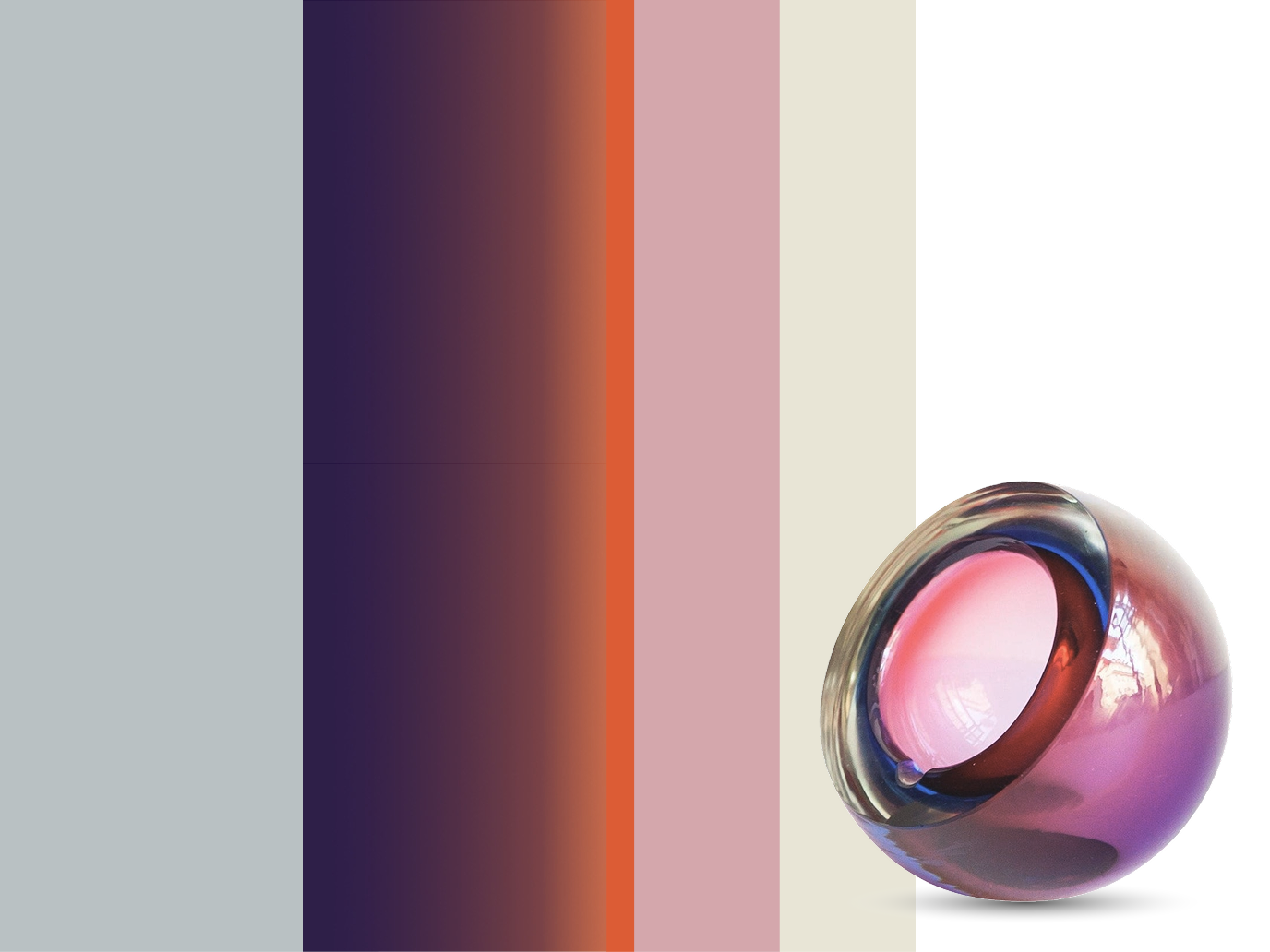
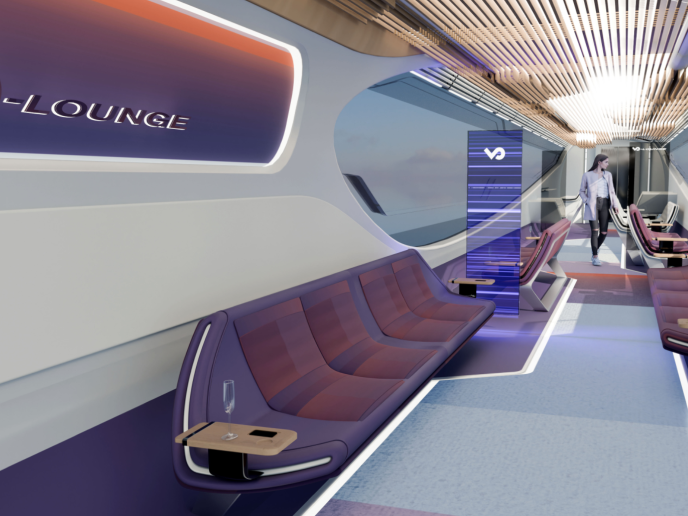
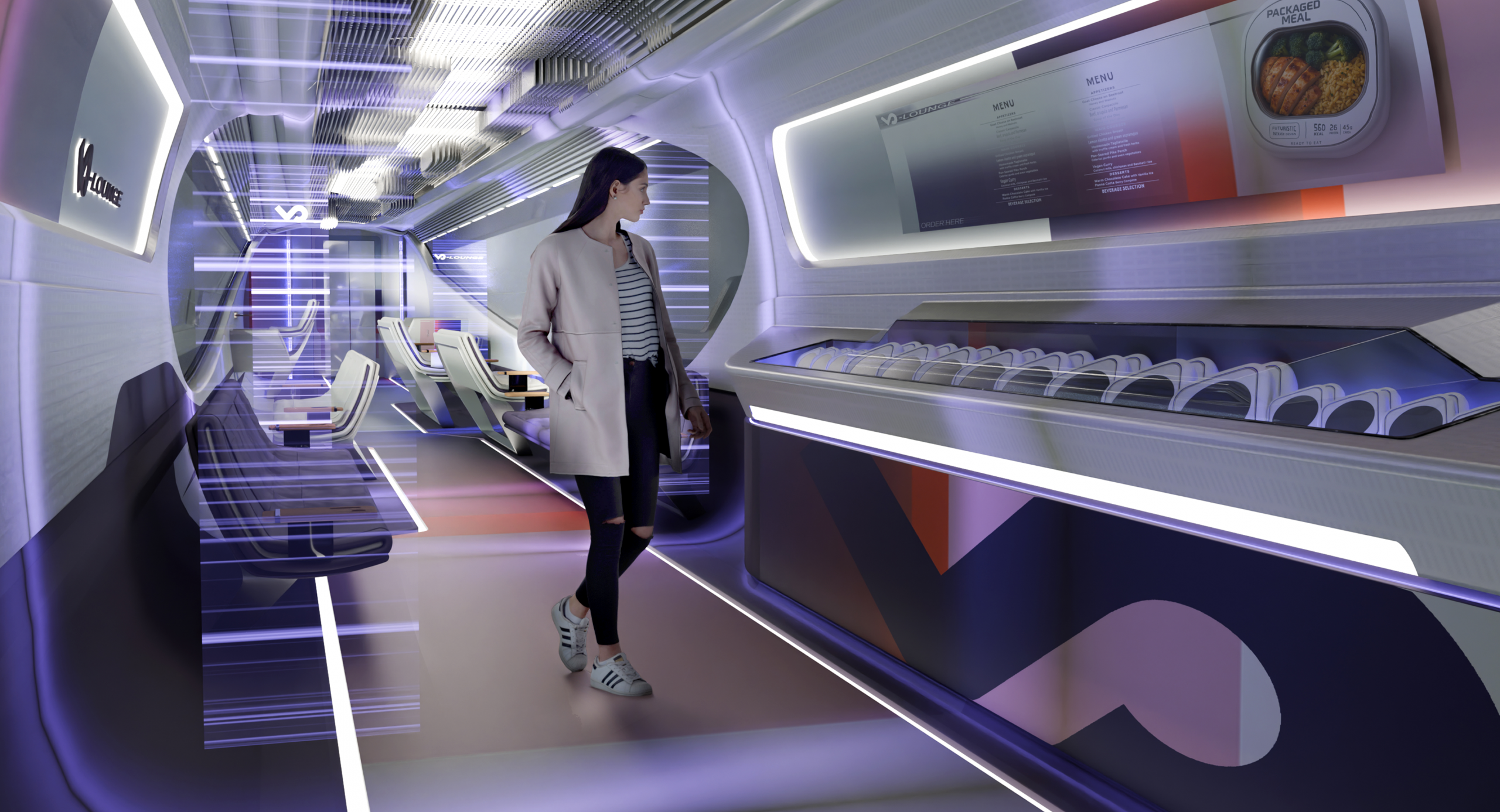
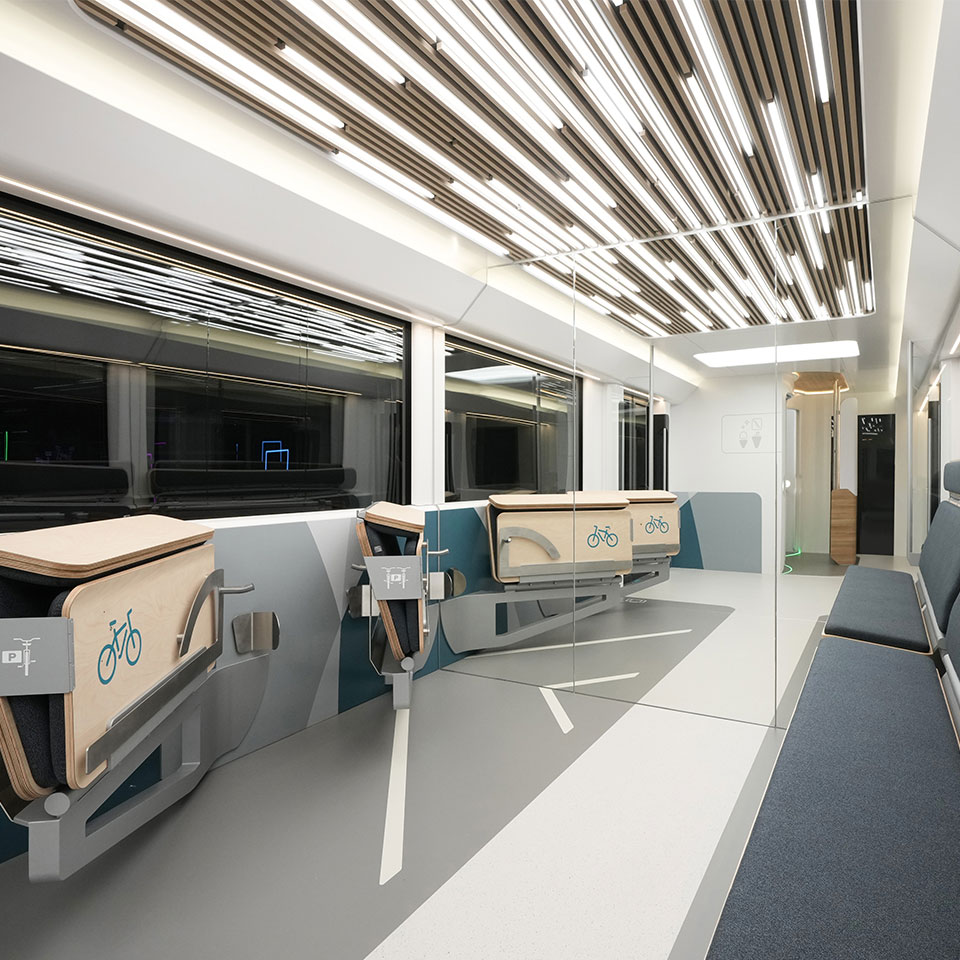
The mobility revolution requires not only new technologies, but also new experiences. To encourage people to switch from cars to trains, travel must be exciting: with spaces that inspire, calm and connect. We see ourselves as partners in this revolution, and believe that design can positively influence every touchpoint of rail travel – functional, aesthetic and emotional. Often underestimated in the past, the train dining car has great potential to become a place that, through thoughtful design and problem-solving with new technologies, highlights the advantages of rail travel. Materials, colours, lighting, acoustics and atmosphere all contribute to making people feel more comfortable – even when there are delays. To tackle this issue with concentrated expertise from the rail industry, we have launched a collaborative project with Siemens Mobility, LANTAL TEXTILES, Probatec AG and Bucher Group based on our preliminary study. The pictures show initial impressions of the space and CMF ideas. Since June 2025, we have been working together to develop the train dining car of the future: a solution that is visually inspiring, functionally convincing and feels right every second.
Initial concepts
In addition to extensive research, we began by analysing passengers: Who uses the train dining car – when, how, why? What expectations, emotions and barriers shape this experience? Based on these findings, we developed user journeys for four personas.
Together with our partners, we then conducted an ideation workshop and developed future usage scenarios and concrete ideas along the journey.
Our approach: the train dining car as a flexible experience landscape – with areas for families, quiet conversations, concentrated work or spontaneous exchanges.
We think of the train dining car as a social space that creates calm, quality and openness through materiality, light and acoustics. Always with an eye on the overall system: ordering, preparation, service, disposal and digital and analogue user guidance.
The goal is a design that combines form, function and emotion into a genuine ‘want-to-have experience’.